Level 4 Vault Explained
From one gymnastics parent to another — Level 4 vault is fast, powerful, and full of hidden deductions you’d never notice from the stands
Level 4 vault is a big step up from Levels 2 and 3. This is the first level where gymnasts perform a front handspring vault over the table — and it’s the moment many fans think, “Okay… NOW it looks like real gymnastics.”
But with that jump in skill comes a jump in judging expectations.
Level 4 vault is all about power, shapes, and control, and judges are watching every millisecond of the vault — not just the landing.
Let’s break it down so you can actually understand what’s happening during that blink‑and‑you‑miss‑it moment.
What Level 4 Vault Is Really About
At this level, gymnasts are building:
Speed down the runway
A strong, clean hurdle
A powerful block off the table
Tight body shapes in the air
Controlled landings
The front handspring vault is the foundation for every future vault — from front handspring‑fronts to Tsuks and Yurchenkos.
What Is the Level 4 Vault?
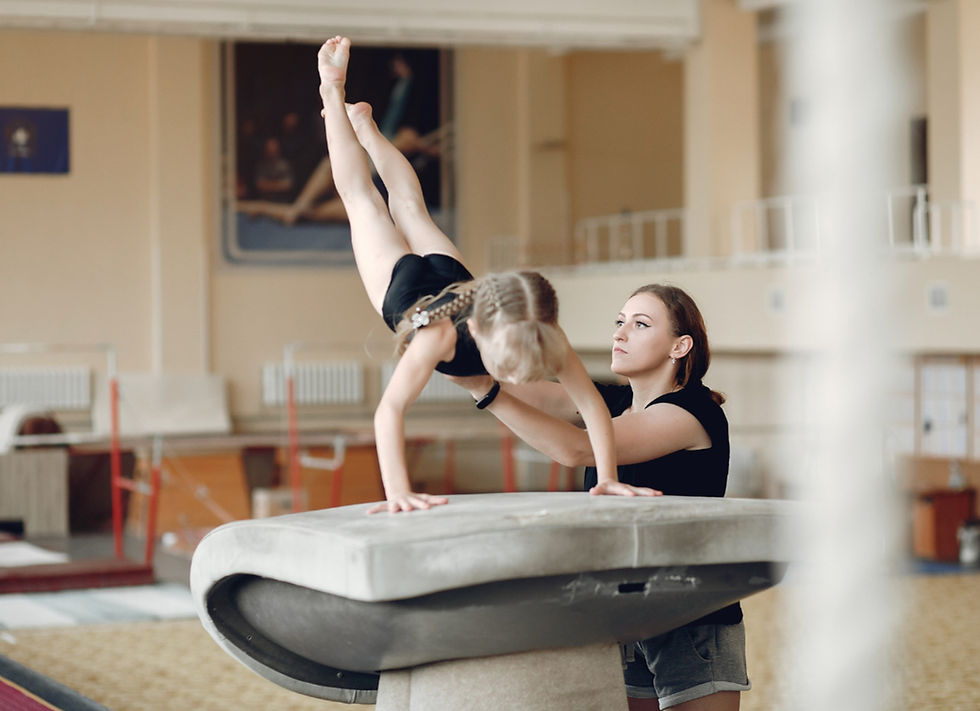
The Level 4 vault is a front handspring over the table.
It includes:
A fast run
A hurdle onto the springboard
A strong block off the hands
A tight, straight body in the air
A controlled landing
This is the first time gymnasts vault over the actual table — a huge milestone.
Vault Is Judged in 4 Phases
While the landing is more obvious, vault starts with the run and judges are looking at everything.
1. The Run (Yes, it matters — a LOT)
A powerful vault starts with a powerful run.
Judges want:
Fast, aggressive sprint
No stutter steps
Arms pumping
Consistent speed
Deductions:
Slow run → up to 0.30
Choppy or hesitant steps → 0.10–0.20
Inconsistent speed → up to 0.20
A weak run = a weak vault.
2. The Hurdle & Board Contact
This is the transition onto the springboard.
Judges want:
Smooth hurdle
Two‑foot takeoff
Strong, clean board hit
Good timing
Deductions:
Poor timing → 0.10–0.20
Uneven feet → up to 0.20
Weak board hit → up to 0.30
This phase sets up the entire vault.
3. The Block (Hands on the Table)
This is the heart of the vault.
Judges want:
Straight arms
Strong push
Tight body
Good angle off the table
Deductions:
Bent arms → up to 0.30
Low block → up to 0.30
Arching → up to 0.20
A strong block = height + power.
4. The Flight & Landing
This is the part parents tend to notice most.
Judges want:
Straight body
Tight legs
Pointed toes
Controlled landing
Deductions:
Bent knees → 0.10–0.30
Legs apart → up to 0.20
Step → 0.05–0.10
Hop → up to 0.20
Deep squat → up to 0.30
Fall → 0.50
A clean landing can save a vault. A messy one can sink it.
The Hidden Deductions Parents Might Not Realize
These happen before the gymnast even leaves the table:
Slow run
Weak board hit
Bent arms on the block
Arching in the air
Feet apart
Low amplitude
Short flight phase
A lot going on in such a short time frame, right...
What Parents Should Watch at Meets
Instead of focusing on the score, look for:
✔ A faster, more confident run
✔ A stronger board hit
✔ Straighter legs in the air
✔ A higher block off the table
✔ A cleaner landing
Now these are the real signs of progress.
Why Level 4 Vault Matters Long-Term
This level builds the foundation for:
Front handspring‑fronts
Tsukahara vaults
Yurchenko vaults
Higher‑level power and technique
Level 4 vault is where gymnasts learn to attack the runway, trust their power, and block with confidence — skills they’ll use for years.


Comments